
Pajero Sport vs Nissan X-Trail: Honest Comparison & Verdict
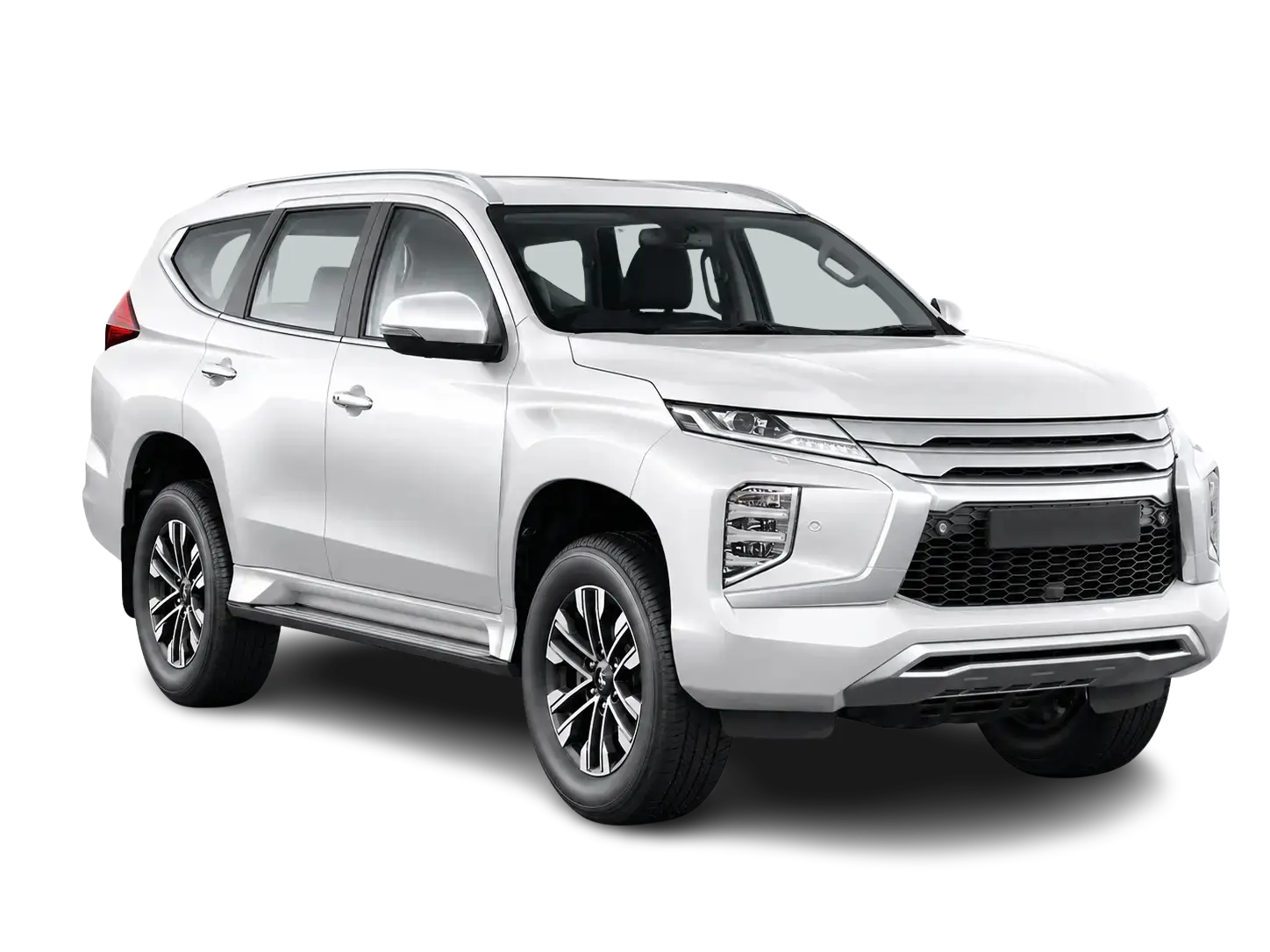
Body-on-frame, low range, full-time Super Select II 4WD, 3,100 kg of towing and seven seats. The Pajero Sport is built to leave the tar, and come back.
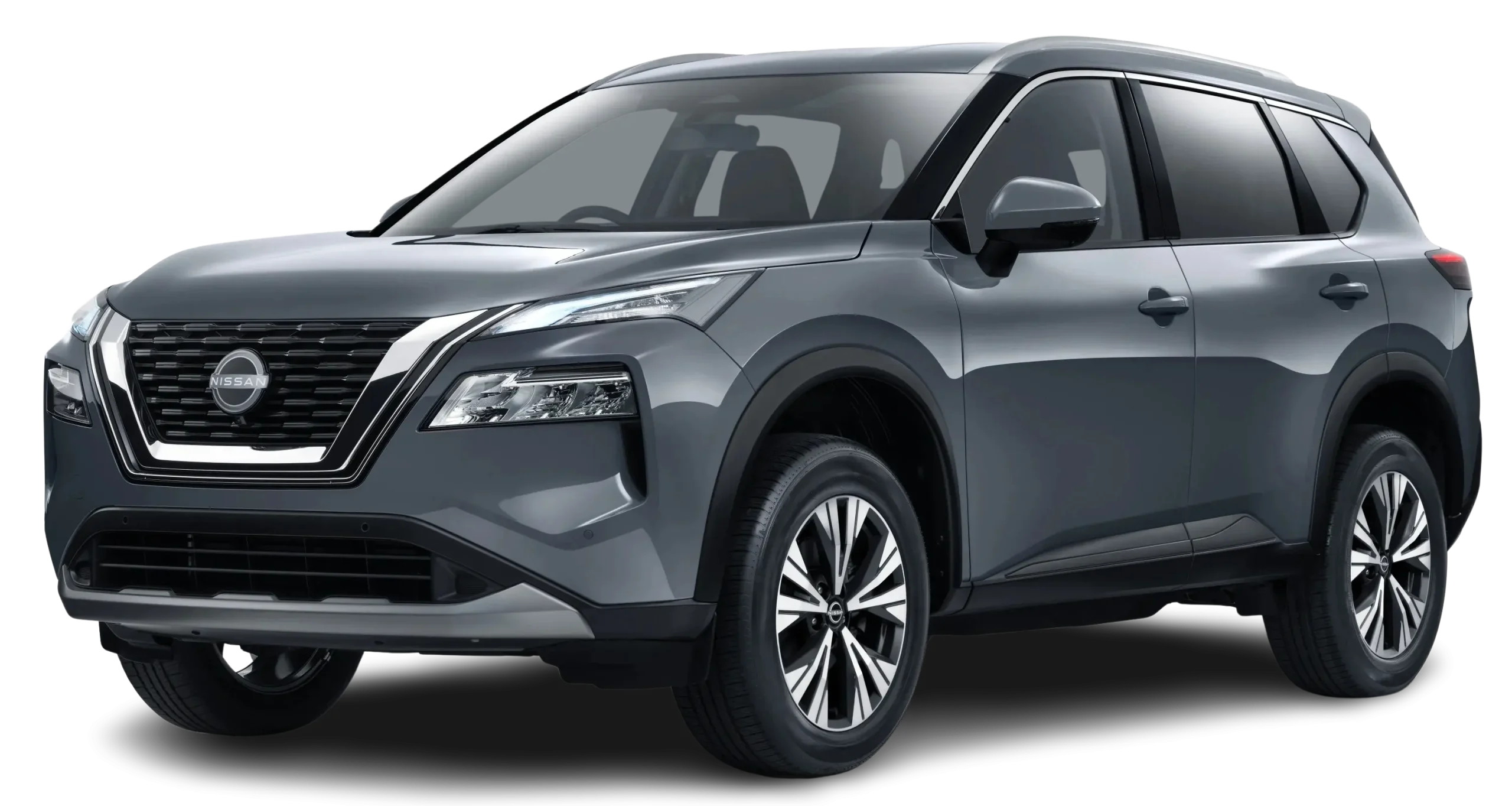
A refined, efficient monocoque crossover with clever AWD, a comfortable cabin and e-POWER hybrid economy. Brilliant on tar and light gravel, but it’s a soft-roader, not a 4×4.
Before anything else, the honest truth: these two aren’t really the same kind of vehicle. One is a proper body-on-frame 4×4; the other is a comfortable monocoque crossover. The real question is which kind you actually need.
The Pajero Sport is a ladder-frame, low-range, diesel 4×4 built to tow, overland and cross the rough stuff. The Nissan X-Trail is a unibody crossover with on-demand “Intelligent” AWD (no low range, no diff lock, modest ground clearance), designed to be efficient, comfortable and easy on tar and light gravel. It’s the difference between a tool for the bush and a tool for the school run.
So why compare them? Because thousands of SA families shopping for a 7-seat SUV genuinely weigh these two, and many discover they don’t need a proper 4×4 at all. If your weekends are tar, suburbs and the occasional gravel road, the X-Trail is cheaper, more economical and more comfortable. If you tow, overland or leave the formal road, the Pajero Sport is in a different league.
Here’s the honest breakdown: where the X-Trail’s comfort and economy win, and where the Pajero Sport’s genuine 4×4 ability is simply untouchable.
Power & Drivetrain X-Trail more efficient
- Big diesel torque: 430 Nm low-down for towing and load-hauling, where the X-Trail makes 300 Nm
- Built to haul: 3,100 kg braked nearly doubles the X-Trail’s ~1,650 kg capacity
- Long-range diesel: ideal for remote travel and big distances between fills
- Far thriftier: the e-POWER hybrid sips around 6.1 L/100km in town, well beyond any diesel 4×4
- Smooth and quiet: the CVT and e-POWER drive are refined and effortless in traffic
- Clever e-4ORCE AWD: excellent traction and stability on tar and light gravel
4WD Systems & Trail Ability Pajero Sport wins: no contest
- Genuine low range (4L): controlled crawling the X-Trail simply doesn’t have
- Locking rear diff & 218 mm clearance: real hardware for real obstacles
- Full-time Super Select II 4WD with 700 mm wading capability
- Body-on-frame durability built to take sustained off-road punishment
- Capable on tar & light gravel: e-4ORCE manages traction and stability well on slippery roads
- No low range or diff lock: it’s not engineered for technical off-road work
- Lower clearance, monocoque body: best kept to formed roads and gentle trails
- An honest soft-roader: excellent at what it’s actually designed to do
Interior & Comfort X-Trail more refined
- Built tough for the bush: a hard-wearing cabin for dust, mud and load
- A proper 7-seater on a long-wheelbase body
- Functional, durable design that shrugs off abuse
- More modern, car-like cabin: a nicer place to spend the daily commute
- Strong tech: large screens and ProPILOT driver assistance
- Comfort-focused, quiet, smooth and easy in traffic
Who Should Buy Which
Pajero Sport vs X-Trail: Full Spec Table
| Specification | Pajero Sport (Exceed) | Nissan X-Trail (top) |
|---|---|---|
| Engine & Performance | ||
| Engine | 2.4L Turbo Diesel | 1.5L VC-Turbo Petrol / e-POWER |
| Power | 133 kW | 120 kW (e-POWER ~157 kW) |
| Torque | 430 Nm, More | 300 Nm |
| Transmission | 8-speed auto | CVT / e-drive |
| Fuel economy (claimed) | ~8.0 L/100km | 6.1–7.5 L/100km, Better |
| Off-Road & 4WD | ||
| Construction | Body-on-frame | Monocoque (unibody) |
| 4WD system | Super Select II 4WD | Intelligent AWD / e-4ORCE |
| Low range (4L) | Yes | No |
| Rear diff lock | Yes | No |
| Ground clearance | 218 mm, More | ~205 mm |
| Wading depth | 700 mm | Not rated |
| Practicality & Towing | ||
| Seating | 7 | 5 or 7 (5+2) |
| Braked towing | 3,100 kg, More | ~1,650 kg |
| Touchscreen | Up to 9-inch | Up to 12.3-inch |
| Cabin comfort | Durable, functional | More car-like |
| Ownership (South Africa) | ||
| Entry price (2026) | R749,900 | From R579,900, Cheaper |
| Top-spec price (2026) | R904,990 | ~R780,000 |
| Running costs | Diesel · towing/load | Lower (esp e-POWER) |
| Best for | Towing · overland · 4×4 | Tar · comfort · economy |
How They Score: Out of 10
By the off-road, towing and overlanding yardstick this site lives by, it isn’t close. The X-Trail collapses in the categories the Pajero Sport is built to win. But that’s the wrong yardstick for many X-Trail buyers. Judged purely as a comfortable, efficient family crossover, it’s excellent, and it wins comfort, economy, value and daily practicality outright.
Pajero Sport Pricing (2026)
Entry · SS4-II · 7-seat 4×4
Leather · 9″ screen · BSW
Sunroof · 360° cam · ACC
The Pajero Sport costs more, but you’re buying a genuine body-on-frame 4×4: low range, diff lock, 3,100 kg towing and overland range. You pay for capability the X-Trail doesn’t have.
X-Trail Pricing (2026)
Petrol · CVT
Hybrid AWD flagship
The X-Trail undercuts the Pajero Sport and costs less to run, especially as an e-POWER hybrid. You’re paying for comfort and efficiency, not off-road hardware.
The real 4×4: built to leave the tar
If you tow, overland or actually go off-road, there’s no contest: body-on-frame, low range, full-time Super Select II 4WD, 3,100 kg of towing and a diesel built for range. The Pajero Sport does things the X-Trail can’t attempt, and does them all day, in the heat, far from a dealer.
The comfortable, efficient crossover
Judged as what it is, a refined, economical family crossover, the X-Trail is excellent. e-POWER economy, a modern cabin, clever AWD for tar and light gravel, and a lower price. If you don’t need a proper 4×4, it’s the smarter, cheaper daily.
We’ll be straight with you: by the measures this site cares about (off-road ability, towing, overlanding, durability), it isn’t close. The X-Trail is a monocoque crossover with on-demand AWD, no low range and no diff lock. It is not built to do what a Pajero Sport does, and no amount of clever electronics changes that.
But that’s only the right yardstick if you actually use it. The Nissan X-Trail is a genuinely good vehicle for its purpose: comfortable, efficient (the e-POWER hybrid especially), well-equipped and noticeably cheaper. For a family whose driving is tar, suburbs and the occasional gravel road, it’s arguably the more sensible buy, and you’d rarely miss the 4×4 hardware.
Our recommendation: be honest about how you’ll actually use it. If you tow, overland or leave the formal road, buy the Pajero Sport. Nothing the X-Trail offers will cover those needs. If you mostly drive on tar and value comfort, economy and a lower price, the X-Trail is the smarter, cheaper choice. Don’t pay for 4×4 ability you’ll never use, and don’t buy a crossover if you genuinely need a 4×4.