
The Pajero
That Started
Everything
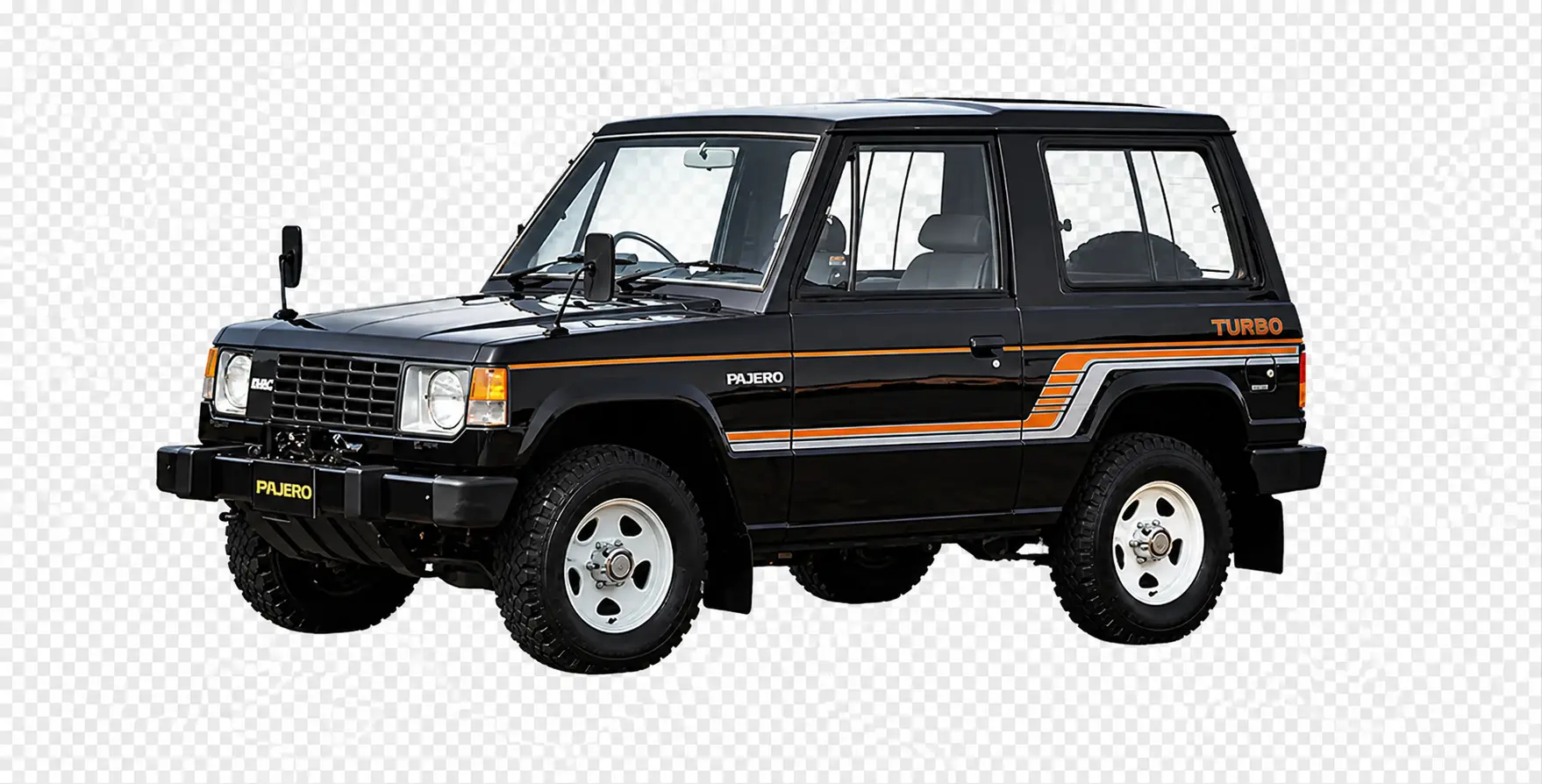
Debuting at the 1981 Tokyo Motor Show, the first-generation Pajero launched in May 1982 and created a new category of lifestyle 4×4 in South Africa. Built on a proper body-on-frame chassis with live axles, it made its Dakar Rally debut in 1983 and won for the first time in 1985, starting a dynasty that no other manufacturer has matched.
SWB & LWB Variants
The original 1982 Pajero was a short-wheelbase (SWB) three-door on a 2,350 mm wheelbase, offered with a metal roof or a removable canvas top for open-air touring. A long-wheelbase (LWB) five-door wagon (2,695 mm wheelbase) joined in early 1983, adding two rear doors, more cargo space and seating for up to seven. The SWB was the lighter, more agile trail machine; the LWB became the practical family overlander that suited South African touring. Both used a body-on-frame chassis with part-time four-wheel drive.
Gen 1 Engines
The Gen 1 was sold with both petrol and diesel fours; South African and export markets leaned on the durable turbodiesels. Two milestones landed in 1988: the 3.0-litre V6 petrol and an intercooler for the 2.5 turbodiesel.
| Engine | Fuel | Output |
|---|---|---|
| 2.6L 4G54 I4 | Petrol | ~76 kW |
| 3.0L 6G72 V6 (from 1988) | Petrol | ~105 kW / 228 Nm |
| 2.3L 4D55 turbodiesel | Diesel | Early cars |
| 2.5L 4D56 turbodiesel (intercooled from 1988) | Diesel | ~210 Nm, the SA workhorse |
What to Watch
The Gen 1 Pajero made its Dakar Rally debut in 1983, just one year after launch. It won the event for the first time in 1985, then again in 1992 and 1993, with the Gen 2 carrying on the torch through seven consecutive victories from 2001–2007. The Gen 1 planted the seeds of a racing dynasty that earned a Guinness World Record never to be broken.
Super Select
4WD. Blister
Fenders. Legend.
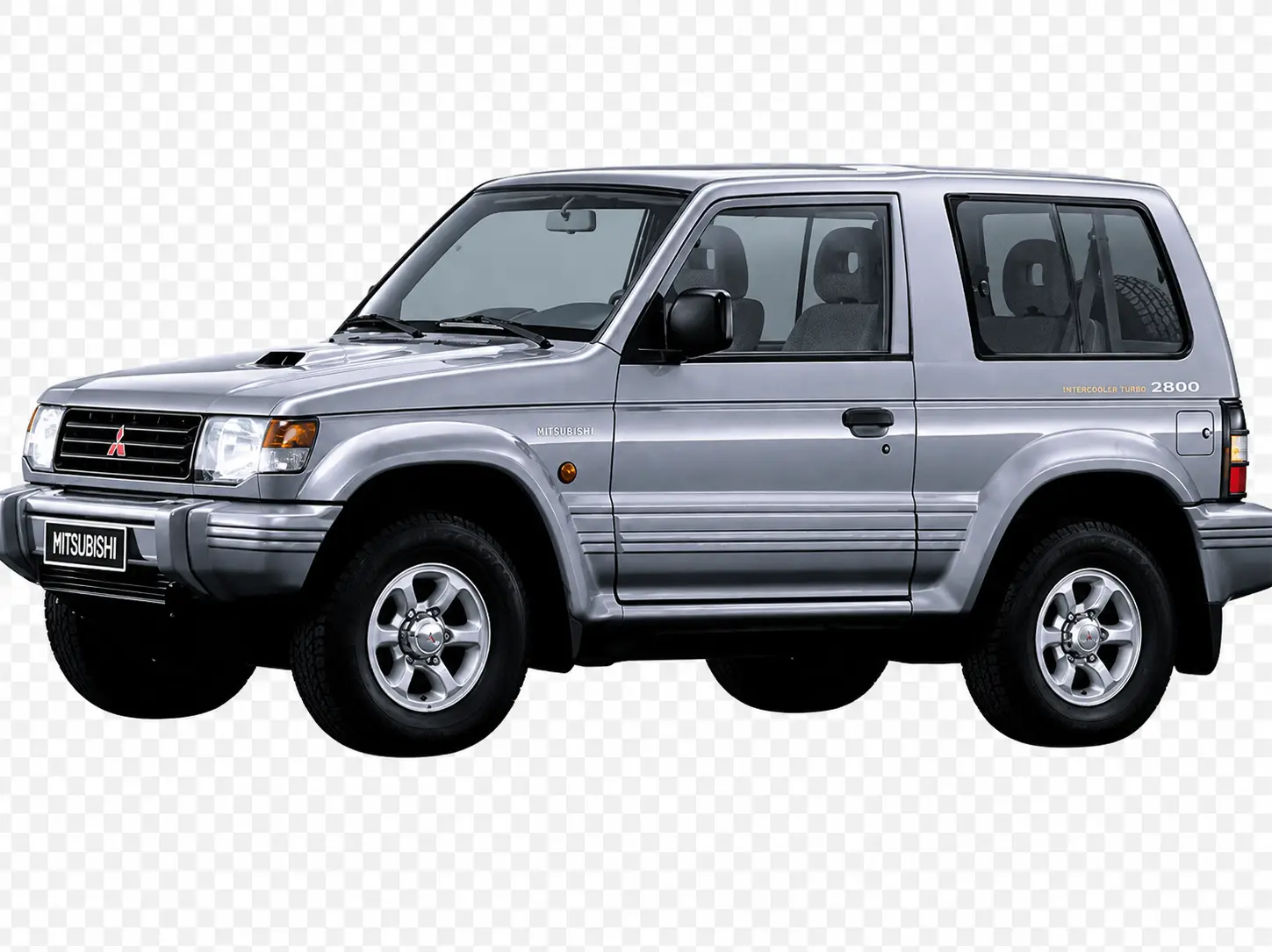
The Gen 2 redefined what a 4×4 could be. The world’s first on-the-fly Super Select 4WD system, the 4M40 2.8 turbo diesel, and the legendary 1998–1999 “blister fender” facelift made this generation the most coveted Pajero in South Africa today. It peaked with 7 consecutive Dakar wins from 2001–2007 using evolved Gen 2 DNA.
SWB, LWB & the Blister Fender
The Gen 2 came in SWB (metal-top and canvas convertible) and LWB (semi-high and high-roof wagon) bodies, and introduced Mitsubishi’s on-the-fly Super Select 4WD (SS4). From 1998, General-Export and Gulf-market cars received the famous “blister fender” facelift (also called Gen 2.5 / NL) with much wider, bulging wheel-arch flares, revised lights, grille and bumpers. The wide arches echo the Pajero Evolution Dakar homologation special, and South African enthusiasts prize blister-fender GLS models for their tougher stance, extra tyre clearance and relative rarity.
Gen 2 Engines
| Engine | Fuel | Output |
|---|---|---|
| 2.4L 4G64 I4 | Petrol | ~110 kW |
| 3.0L 6G72 24v V6 | Petrol | ~136 kW |
| 3.5L 6G74 V6 (from 1994; GDI from 1998) | Petrol | ~150 kW, most powerful petrol |
| 2.5L 4D56 turbodiesel | Diesel | Durable base diesel |
| 2.8L 4M40 turbodiesel (from 1993) | Diesel | ~92 kW / 300 Nm, the one to have |
What to Watch
What to check before buying a used Gen 2:
- 4M40 2.8 timing chain: plastic guides wear thin and can shatter. A developing rattle warrants immediate inspection, and many owners renew the chain and guides pre-emptively.
- 4D56 2.5 timing belt: a rubber belt that must be replaced on schedule (~100,000 km). A snapped belt bends valves.
- Rust: check wheel arches, door bottoms and under the seals on these 25-plus-year-old cars.
- Age items: budget for tired bushes, radiators and air-conditioning.
- 3.5 GDI petrol: the direct-injection V6 is complex and thirsty. Only buy one backed by a knowledgeable specialist and good fuel.
Italian Design.
Serious
Off-Road DNA.
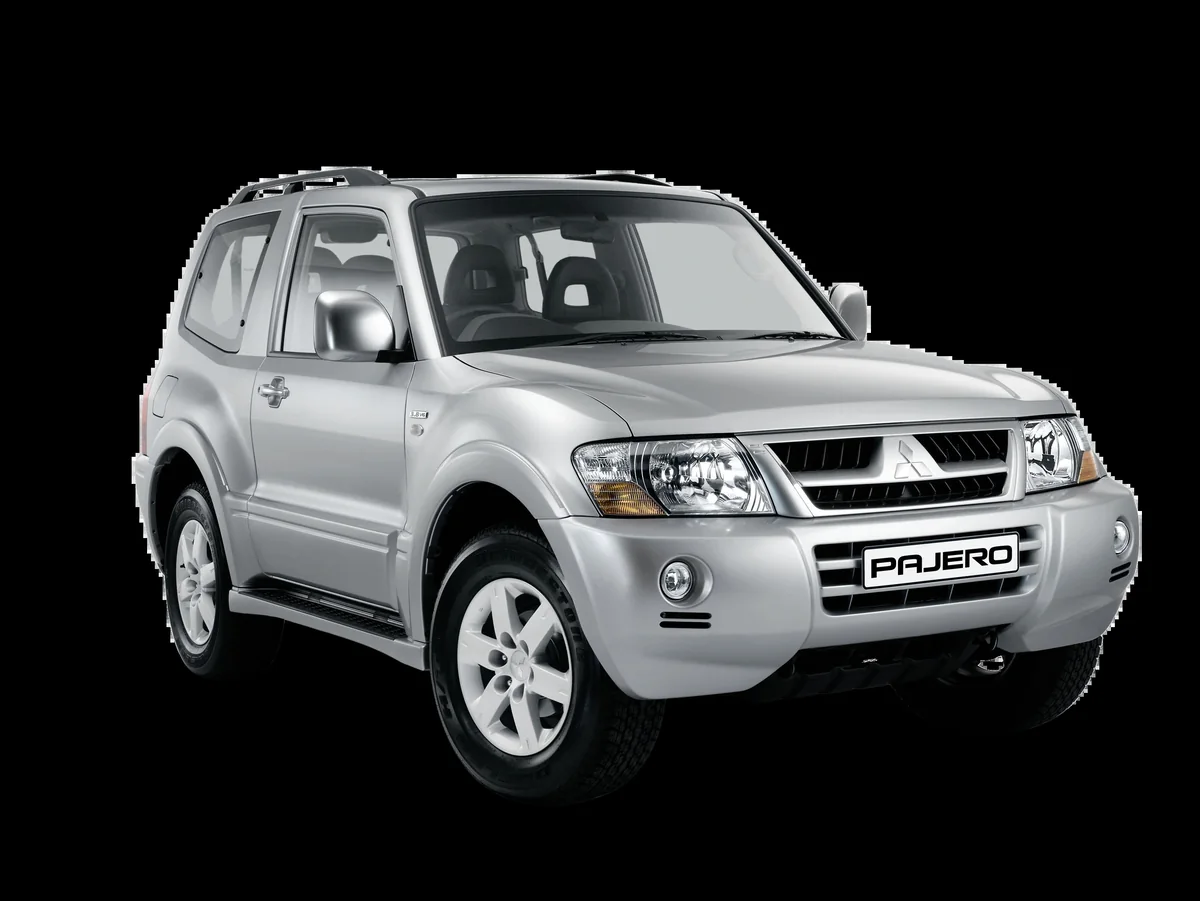
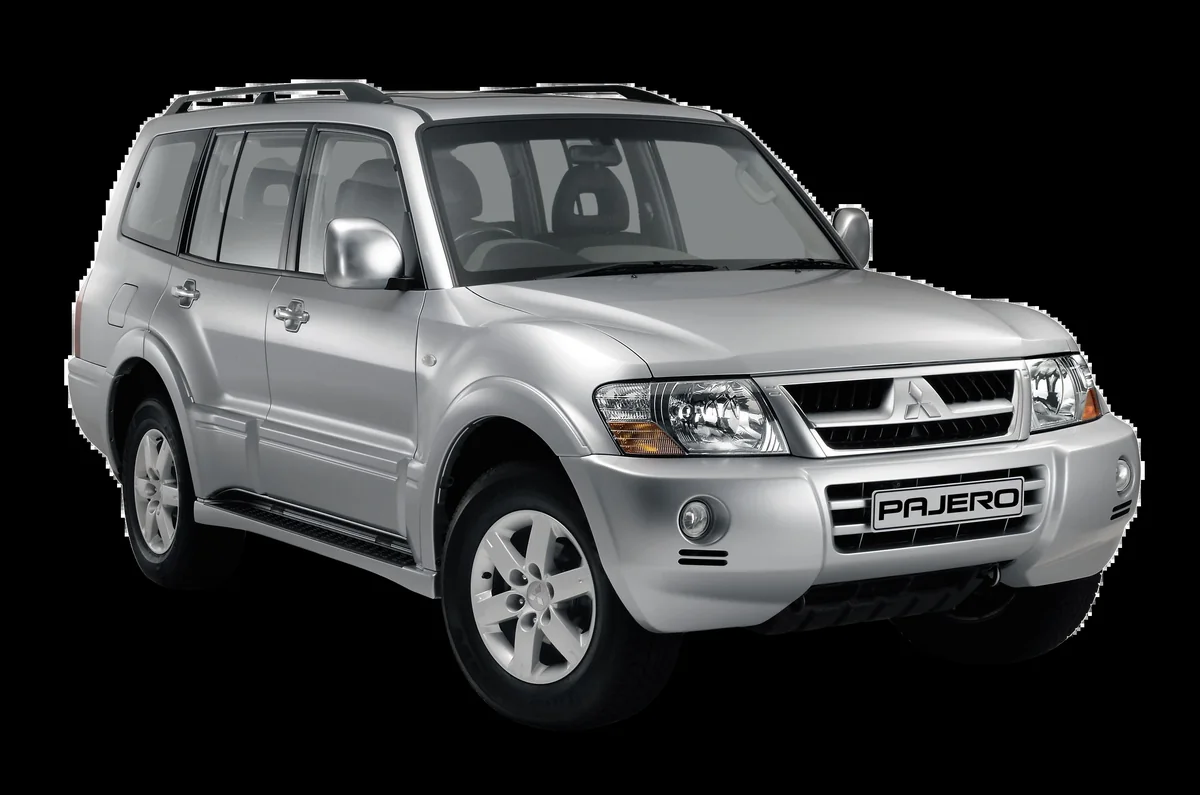
Designed by Pininfarina and launched in 1999, the Gen 3 was a ground-up reinvention. A unibody-with-subframe construction made it 300% more torsionally rigid, while independent rear suspension transformed on-road manners without sacrificing capability. The 3.2 Di-D common-rail diesel made it genuinely fast and fuel-efficient.
Gen 3 Engines
| Engine | Fuel | Output |
|---|---|---|
| 3.2L 4M41 Di-D turbodiesel | Diesel | ~120 kW / 370 Nm, the SA mainstay |
| 3.5L 6G74 V6 | Petrol | ~149 kW |
| 3.8L 6G75 V6 (from 2003) | Petrol | up to 184 kW, range-topping |
What to Watch
- 4M41 top timing-chain guide: the plastic upper guide wears through and can break, jamming the chain. Inspect and renew from ~120,000–160,000 km (a start-up rattle is the warning sign; an upgraded guide is available).
- Early Di-D injectors & electronics can be troublesome. Check for smooth cold starts and no warning lights.
- Intake coking: high-km diesels bake oil vapour into the intake manifold, costing power. A clean-out (and a catch-can) sorts it.
- Rust & history: check for corrosion and insist on a documented service record.
The Last
True Pajero.
Still the Best.
The Gen 4 was the final evolution of the true Pajero, a 15-year production run that speaks to its quality. Refined suspension, upgraded 3.2 Di-D diesel producing 140 kW, Super Select II 4WD, and modern safety tech made it the most accomplished Pajero ever built for road and trail use. It was discontinued in 2021, cementing its legend.

Gen 4 Engines
| Engine | Fuel | Output |
|---|---|---|
| 3.2L 4M41 Di-D common-rail turbodiesel | Diesel | ~125 kW early → ~140 kW / 441 Nm later, SA mainstay |
| 3.8L 6G75 V6 MIVEC | Petrol | ~184 kW / 329 Nm |
What to Watch
- Timing-chain guide: the 4M41 still uses the wear-prone top guide. Factor inspection/replacement even on later cars (listen for a diesel rattle).
- DPF (post-facelift diesels): prefers regular open-road running to regenerate cleanly. Favour a highway-driven example over a short-trip city car.
- Injectors & intake: injectors tire at high mileage and the intake manifold cokes up beyond 100,000 km.
- Coastal rust: check the underbody carefully; a well-documented 2015–2017 GLS is a common sweet spot.
The Return.
All-New
Gen 5.

After five years away, the Pajero returns as Mitsubishi’s new global flagship, confirmed for a world premiere in Autumn 2026. The fifth-generation Pajero rides on a heavy-duty ladder-frame platform derived from the Triton, with model-specific cabin and suspension tuning, promising outstanding off-road capability alongside a more refined, comfortable ride. It continues to be sold as the Montero in some markets. Engines, full specifications and South African pricing are still to be announced. We’ll publish the detail the moment it’s official.
What’s Confirmed So Far
See our the new Pajero for everything Mitsubishi has officially confirmed, and register there to be notified the moment it lands. The full new Pajero guide follows once the new Pajero is on sale.
The Pajero
Name Lives
On in SA.
When the true Pajero was discontinued in 2021, the Pajero Sport carried the nameplate forward in South Africa. Built on a ladder-frame chassis shared with the Triton, it packs Mitsubishi’s proven Super Select II 4WD, a 2.4L MIVEC turbo diesel, and 7-seat comfort into a modern, technology-rich package priced competitively against the Fortuner and Everest.

Pajero Sport Engine
The current South African Pajero Sport uses the 2.4-litre 4N15 MIVEC DOHC intercooled turbodiesel, about 133 kW and 430 Nm, driving through a smooth 8-speed automatic and Super Select 4WD-II with selectable off-road modes and hill-descent control. The strong torque and wide-ratio gearbox give relaxed cruising and confident towing (braked capacity around 2,850–3,100 kg depending on market), while the chain-driven common-rail engine returns roughly 8 L/100km combined. It is a clear step up in refinement and economy over the older ladder-frame Pajero diesels.
Pajero Sport Key Specs
| Engine | 2.4L MIVEC DOHC Intercooled Turbo Diesel |
| Power | 133 kW @ 3,500 rpm |
| Torque | 430 Nm @ 2,500 rpm |
| Transmission | 8-speed automatic |
| 4WD System | Super Select II: 2H / 4H / 4H Lock / 4L |
| Off-road modes | Gravel · Mud/Snow · Sand · Rock |
| Seating | 7 seats standard |
| Ground clearance | 218 mm |
| Wading depth | 700 mm |
| Approach angle | 30° |
| Fuel tank | 68 L |
| Fuel consumption | 8.1 L/100km (combined) |
| Price range (SA 2026) | R749,900 – R904,990 |
| Warranty | 3yr/100,000 km · 5yr service plan |
What to Know
All Generations Compared
| Spec | Gen 1 · 1982–91 | Gen 2 · 1991–99 | Gen 3 · 1999–06 | Gen 4 · 2006–21 | Pajero Sport |
|---|---|---|---|---|---|
| Body styles | SWB + LWB | SWB + LWB + Blister Fender | SWB + LWB | SWB + LWB | LWB only (5-door) |
| Best engine | 2.5TD 4D56 | 4M40 2.8TD Best | 3.2 Di-D 4M41 | 3.2 Di-D 140 kW | 2.4L MIVEC TD |
| Max power | 104 kW (V6) | 150 kW (3.5 V6) | 184 kW (3.8 V6) | 184 kW (3.8 V6) | 133 kW |
| Max torque (diesel) | ~210 Nm | 300 Nm | 370 Nm | 441 Nm Most | 430 Nm |
| 4WD system | Part-time only | Super Select SS4 | Super Select II | Super Select II | Super Select II |
| Chassis type | Body-on-frame | Body-on-frame | Unibody + subframe | Unibody + subframe | Ladder frame |
| Ground clearance | ~200 mm | 205 mm | 205 mm | 220 mm | 218 mm |
| Off-road ability | Extreme | Extreme | Very High | Very High | High |
| On-road comfort | Harsh | Moderate | Good | Very Good | Good |
| Airbags | None (early) / 2 | 2 (from 1993) | Up to 6 | 7 SRS | 7 SRS |
| SA entry price (2026) | R25k–R80k | R25k–R320k | R80k–R200k | R180k–R450k | R750k–R905k (new) |
| Parts availability | Scarce (40 yrs) | Moderate | Good | Good | Excellent |
| Best for | Collectors · Restorers | Enthusiasts · Overlanders | Daily drivers · Adventure | All-round · Families | Families · New buyers |
Sources & Further Reading
Engine specifications and generation details were verified against the following references; power and torque figures are quoted as typically documented and can vary by market and model year.
- Mitsubishi Pajero: Wikipedia (generation spec tables, engines, body variants)
- Mitsubishi Pajero Sport: Wikipedia (4N15 engine, Super Select II)
- Used Mitsubishi Pajero review: ReDriven (known issues, buyer advice)
- Pajero Owners Club of South Africa (model identification, blister-fender series)
- The Mitsubishi Pajero Evolution: Silodrome (Dakar homologation background)
- TopAuto (South African Pajero Sport pricing, power and economy)
- 2024 Mitsubishi Pajero Sport review: CarExpert (8-speed auto, towing, economy)