
1999 – 2006 Italian Design.
Serious Off-Road.
Styled by Pininfarina, engineered by Mitsubishi. The Gen 3 transformed what a Pajero could be: 300% more torsionally rigid, independent rear suspension, and the formidable 3.2L Di-D common-rail diesel. The most technologically refined Pajero before the final Gen 4.
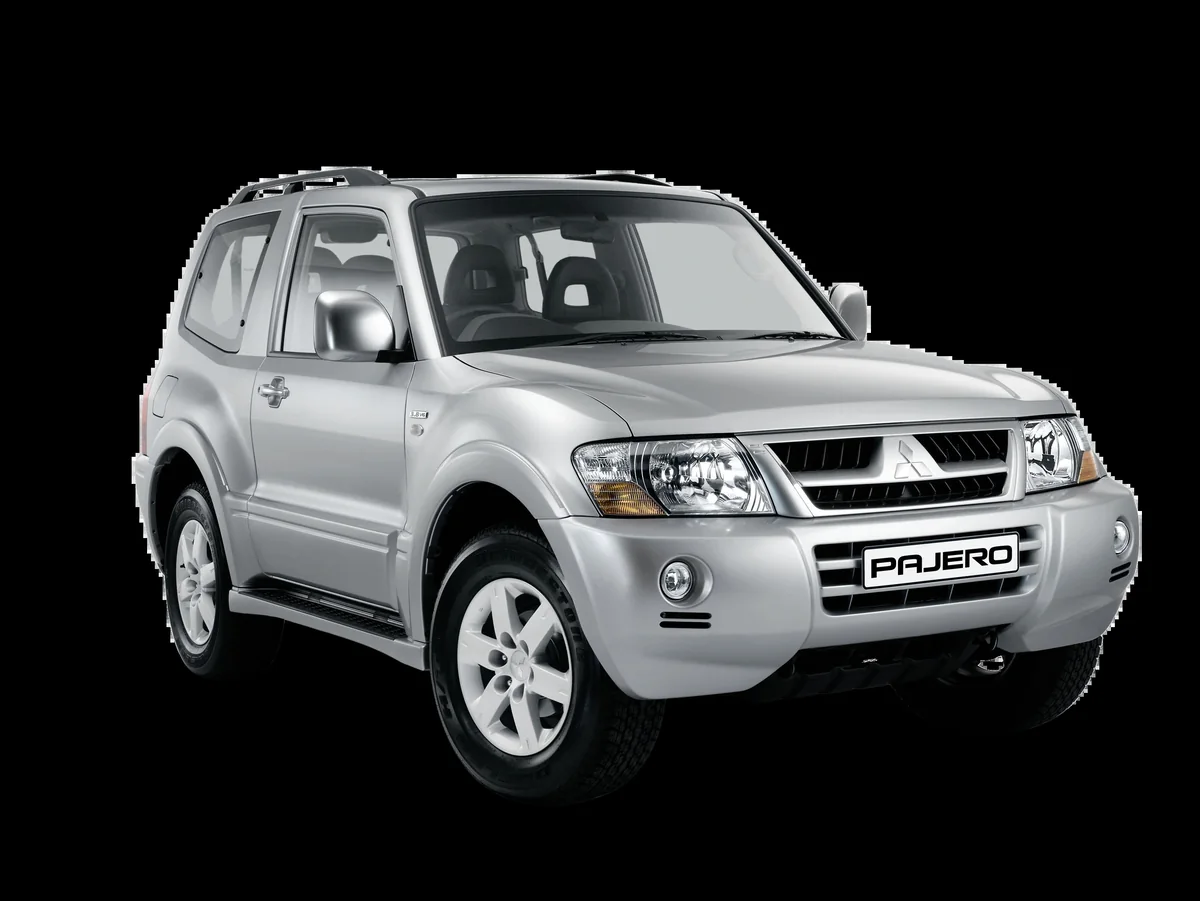
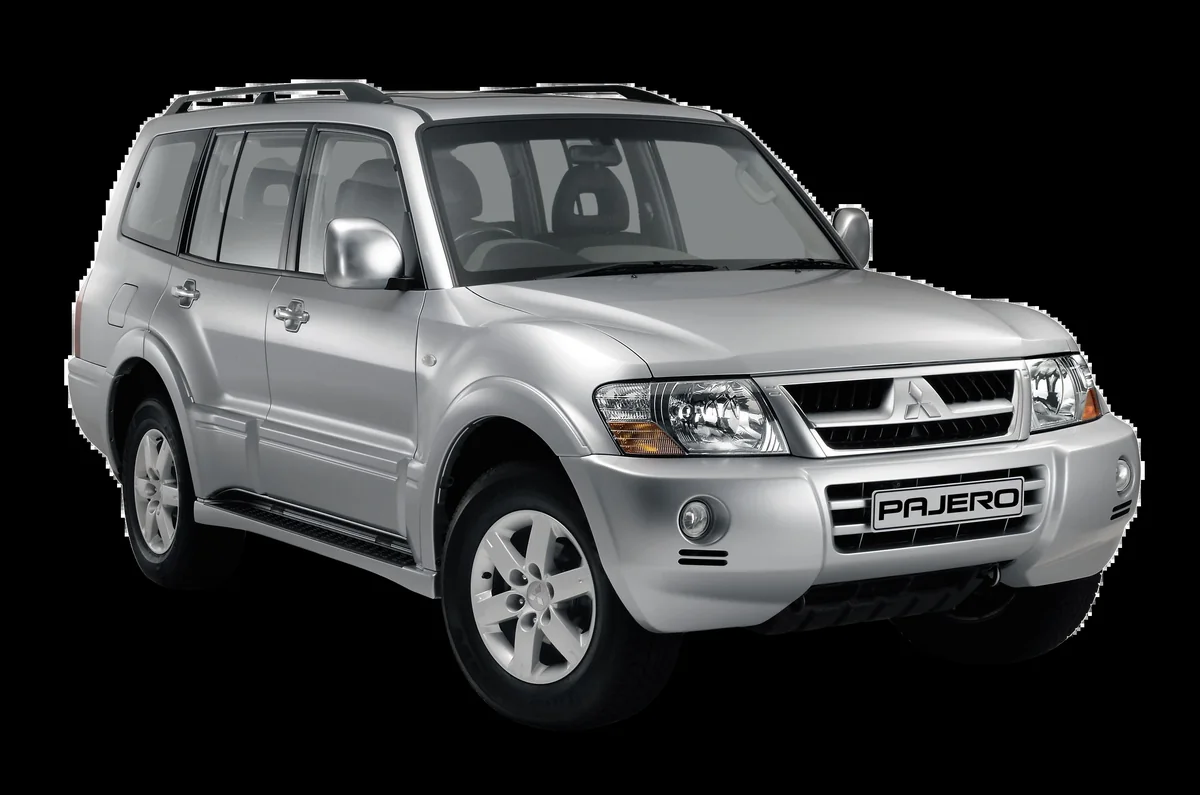
A Ground-Up Reinvention
When Mitsubishi launched the Gen 3 in 1999, they didn’t just update the Pajero. They reinvented it. The new platform moved to a unibody-with-subframe construction, replacing the traditional body-on-frame design of the Gen 1 and Gen 2. Critics raised their eyebrows. Off-road purists worried. Then people drove it.
The new architecture delivered a vehicle that was dramatically stiffer, significantly lighter, and radically more refined on the road, while losing minimal off-road capability. The Super Select II 4WD system retained all-mode capability, the approach and departure angles remained serious, and the 3.2 Di-D diesel was a revelation: 370 Nm of torque, common-rail precision, and genuine fuel efficiency for a vehicle this capable.
For South African buyers today, the Gen 3 represents a sweet spot: old enough to have depreciated significantly from new-car pricing, young enough that parts availability is still strong, and capable enough to tackle any SA trail from the Kgalagadi to the Sani Pass.
Gen 3 Innovations Over Gen 2
The third-generation Pajero (1999–2006) wasn’t a facelift. It was a ground-up reinvention that changed what the Pajero fundamentally was. Where the Gen 2 rode on a separate body-on-frame chassis with a live rear axle, the Gen 3 introduced a run of firsts that made it dramatically more capable on the road without giving up its off-road credentials.
What changed
- First monocoque Pajero. Gen 3 switched to unibody (monocoque) construction with an integrated ladder frame, lower, stiffer and far more car-like to drive than the old body-on-frame Gen 2.
- Fully independent rear suspension. A new multi-link IRS replaced the Gen 2’s live rear axle, transforming ride comfort and on-road handling, a genuine turning point for the model.
- Super Select II (SS4-II). The 4WD system was refined with a planetary-gear centre differential and a default 33:67 front-to-rear torque split. See our Super Select guide.
- Landmark engines. The 3.2-litre DI-D (4M41) direct-injection turbo-diesel arrived, alongside 3.5- and 3.8-litre GDI V6 petrols.
- RISE safety body and rack-and-pinion steering (replacing the older recirculating-ball setup) for sharper, more precise steering.
Launched in Japan in August 1999 and reaching most markets as a 2001 model (with a facelift in 2003), the Gen 3 is the point at which the Pajero became a genuinely refined family 4×4.
Gen 3 Engine Guide
The 3.2 Di-D is the unambiguous recommendation for SA buyers: torque, economy, and performance combined. The V6 petrol variants are smooth but expensive to run in SA fuel conditions.
| Code | Engine | Power | Torque | Notes | Verdict |
|---|---|---|---|---|---|
| 4M41 | 3.2L Di-D Common-Rail Diesel | 121 kW | 370 Nm | The one to buy. Smooth, torquey, economical relative to engine size. Watch timing chain guide at 120k km service. Injectors wear at high mileage. Avoid excessive short trips. | Best Buy |
| 6G74 | 3.5L V6 MIVEC Petrol | 147 kW | 275 Nm | Refined and smooth but 13–17 L/100km is punishing in SA. Available in 24-valve form. Cooling system maintenance critical. Good option if diesel fuel quality is a concern. | Good Option |
| 6G75 | 3.8L V6 Petrol (from 2003) | 184 kW | 329 Nm | The most powerful Gen 3. Excellent highway performance. Available in Exceed trim. High fuel consumption limits bush usefulness. Same cooling system vulnerabilities as 3.5 V6. | For Highways |
The Gen 3 3.2 Di-D uses a timing chain, not a belt (no replacement schedule in the traditional sense). However, the top timing chain guide is known to wear and should be inspected at or before 120,000 km. Cost to check: R800–R1,200. Cost to ignore: an engine rebuild. Ask for documented evidence this was checked on any Gen 3 Di-D over 100,000 km.
Complete Gen 3 Specs
| Production | 1999–2006 Japan; ~2002–2007 export |
| Platform | Unibody with front & rear subframes |
| Front suspension | Independent double wishbone, coil springs |
| Rear suspension | Independent multi-link, coil springs (IRS) |
| SWB wheelbase | 2,545 mm |
| LWB wheelbase | 2,780 mm |
| Ground clearance | 205 mm |
| Approach angle (SWB) | 44° |
| Departure angle (LWB) | 26° |
| Wading depth | 500 mm |
| 4WD system | Super Select II: 2H/4H/4H-Lock/4L |
| Transmission | 5-speed manual / 5-speed automatic |
| Seating | 5 (SWB) / 5 or 7 (LWB) |
| Fuel tank (LWB) | 88 L |
| Towing capacity | 3,100 kg (braked) |
| Airbags | Up to 6 SRS |
| SA entry price (2026) | R80,000–R200,000 |
| Chassis stiffness | 300% more than Gen 2 |
Known Issues & What to Inspect
The Gen 3 is a tough, well-sorted 4×4, but a few specific weak points make or break a used example, and the biggest one can end an engine. Inspect carefully.
The 3.2 DI-D timing-chain guide (the big one)
The 4M41 3.2-litre diesel uses a plastic upper timing-chain guide that wears thin and can break. Fragments can jam the chain, causing it to jump timing and, in the worst case, bend valves and wreck the cylinder head. Owners’ clubs recommend inspecting and replacing the upper guide roughly every 90,000 km (checked alongside valve clearances). A rattle from the front of the engine is a red flag, stop driving and inspect immediately. It’s a cheap part and cheap insurance against a very expensive failure. Read our full 3.2 Di-D common problems guide.
Other checks
- GDI V6 petrols (3.5/3.8): prone to carbon and deposit build-up and thirsty in the real world. The 3.2 diesel is the smarter long-term buy in South Africa.
- Diesel fuel system: injectors and the fuel pump can need refreshing on high-kilometre engines.
- Rust: check the rear wheel arches, tailgate, sunroof surround and underbody, worse on coastal cars.
- Rear IRS: inspect bushes, wheel bearings and sideshaft/diff oil seals for weeping.
- 4WD: cycle Super Select II through all modes and confirm clean engagement.
Sources
- Wikipedia: Mitsubishi Pajero (construction, suspension, engines)
- Pajero Owners Club of South Africa: Gen 3 timing chain & tensioner
- Pajero 4WD Club of Victoria: 3.2 Di-D upper timing-chain guide
- Andrews High Tech Automotive: Mitsubishi timing-chain failure
What to Pay
The Gen 3 Pajero is arguably the most underrated vehicle in the entire SA used 4×4 market. It looks dramatic (Pininfarina doesn’t design ugly vehicles), it’s equipped with the best diesel engine of its era, and it handles roads the Gen 2 would refuse to enjoy. A well-maintained 3.2 Di-D LWB with verified timing chain history is one of the best used 4×4 buys in South Africa at any price point. The IRS does marginally reduce extreme articulation versus the Gen 2, but for 99% of SA trails, the difference is irrelevant. Buy the cleanest example you can find, check the timing guide history, and enjoy a vehicle that Pininfarina designed for the ages.
Gen 3 Resources
- Pajero Owners Club of South Africa: the go-to SA forum for Gen 3 technical help, timing-chain advice and buying guidance.
- 4x4Community.co.za: active South African 4×4 forum with a strong Pajero following.
- Pajero 4WD Club of Victoria: one of the best technical resources for the 3.2 Di-D.
- Mitsubishi Pajero/Shogun Owners Club (UK): deep technical archive.
- On this site: 3.2 Di-D common problems · Super Select 4WD · Pajero specifications