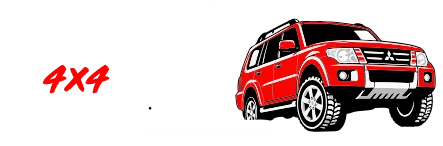
The factory that built every Pajero sold in South Africa for four decades now makes toilet paper.
That is not a joke at Mitsubishi’s expense. It is the literal fate of Pajero Manufacturing Co., Ltd., the dedicated plant in Sakahogi, Gifu Prefecture, which turned out more than 3.29 million Pajeros across four generations and was sold to Japan’s largest tissue maker for about four billion yen.
It is also a piece of the story almost nobody writes about. We cover what the Pajero is and what it costs. This is where it came from.
Pajerotown
Sakahogi is a small town in Kamo County, in Gifu Prefecture in central Japan. Mitsubishi Motors owned the plant outright, and it was the largest employer for miles. Locally the town was known as Pajerotown, which tells you most of what you need to know about the relationship.
At its peak the site built around 170,000 vehicles a year. Employment figures at the end are reported differently depending on the source, between roughly 900 and 1,200 people, and the Japan Times put it at about 1,200 when the closure was announced.
What it is worth understanding about a plant like this is that it was not a line inside a larger complex. It was a company. Pajero Manufacturing existed to build this vehicle, which is why its closure landed on the town the way it did.
It did not only build Pajeros
The name is slightly misleading. Over its life the Sakahogi plant also produced:
- The Delica, Mitsubishi’s four-wheel-drive van, which South Africans know mostly through grey imports
- The Outlander
- The Forte and Mighty Max pickups, the Pajero’s own ancestors
- Escalator trusses for the wider Mitsubishi group, which is the sort of thing a Japanese industrial conglomerate does with spare floor space
- Contract vehicles for other manufacturers, reportedly including Toyota and Honda, using capacity the Pajero was not consuming
That last point matters for understanding the ending. A plant filling its spare capacity with other companies’ cars is a plant with spare capacity.
How it ended, in order
The dates get muddled constantly, including on sites that should know better, because there were two separate farewell editions and three different closure dates reported. Here is the sequence as best the record supports it.
| When | What happened |
|---|---|
| August 2019 | The Pajero is discontinued in Japan, marked by a 700-unit Final Edition for the domestic market. Production continues for export. |
| July 2020 | Mitsubishi announces the plant’s closure as part of a mid-term plan to cut fixed costs by around 100 billion yen. It is the company’s first plant closure in Japan since the Ooe factory in Aichi in 2001. |
| March 2021 | Gen 4 production ends at Sakahogi, the Pajero’s only plant. The last batch is a second Final Edition of 800 units, sold in Australia as 2022 models with a larger fuel tank and unique badging. |
| 2021 | Vehicle production at the site ceases. Delica production moves to the Okazaki plant in Aichi. |
| March 2022 | Nikkei reports the sale of the site to Daio Paper. |
| By March 2023 | Ownership transfer expected to complete. |
The two Final Editions are the detail most accounts get wrong, and we had it wrong on this site too until we checked. The widely quoted 700-unit figure was the Japanese market send-off in 2019. The actual last Pajeros built were the 800 made in early 2021, and a good number of those went to Australia. If you see “700 Final Editions marked the end of the Pajero”, it is conflating the two.
Reported closure dates vary between 2021 and 2023 depending on the publication, and the likely reason is that they are describing different things: the end of vehicle production, the formal winding up of the company, and the completion of the property sale all happened at different times.
Four billion yen, and the tissue mill
Daio Paper is one of Japan’s largest paper manufacturers and the maker of the Elleair brand of tissues and toilet paper. Nikkei reported the price for the Sakahogi site, including the land, at about four billion yen, roughly 33 to 34 million US dollars. One Australian report quoted eight billion yen, which looks like an outlier against the rest of the reporting.
Daio’s plan is sanitary paper products, which is the category covering tissues and toilet paper. The logic is geographic as much as industrial: the site sits near Daio’s existing mill at Kani, which had been expanded, and the new facility complements it.
There is a temptation to treat this as humiliating, and the headlines at the time certainly did. It is worth resisting. A large, well-serviced industrial site with road access and a trained local workforce is valuable to somebody, and a paper mill keeps the rates paid and some of the jobs in the town. The alternative for a closed car plant is usually an empty slab.
What happened to the people
Of roughly a thousand employees at the end, the reported split was about 30 percent reassigned within Mitsubishi Motors, about 30 percent taking jobs with other businesses in the area, and just over 250 accepting early retirement. Some of those were expected to end up working at the Daio plant on the same ground.
The background to all of it was cost. Mitsubishi’s fixed costs had risen roughly 30 percent between the 2015 and 2019 financial years under the expansion strategy of the Carlos Ghosn era, and the mid-term plan that closed Sakahogi was the correction. The Pajero did not die because it stopped being good. It died because a dedicated plant running below capacity is the most expensive thing on a balance sheet.
Where the Pajero is built now
The fifth-generation Pajero is not built in Japan. It is built in Thailand, at the Mitsubishi plant that also produces the Triton, the current Pajero Sport and the latest Nissan Navara. Australian registration data confirmed it before Mitsubishi made much of it: the VIN prefix on the new car is MMA, which identifies Mitsubishi’s Thai production.
For South African buyers this is the practical part of the whole story, and there are three consequences worth holding on to.
- It shares a line with vehicles we already know. The Triton and the Pajero Sport both come from there and both have established parts and service networks here. That is a better starting position than a Japanese-built low-volume import.
- Thailand is a familiar trade route. Most of the bakkie-derived 4x4s sold here already arrive from Thailand, which simplifies the supply chain rather than complicating it.
- Japanese build quality is no longer part of the pitch. Whether that matters is an argument people will have for years. The Pajero Sport has been Thai-built throughout its life here, and it has not been a quality problem.
Mitsubishi has said production will extend to Japan and Australia after the Thai launch, with distribution reaching roughly 100 countries from 2027. South Africa is confirmed, with local arrival expected by the end of 2027. The detail is in our full guide to the new Pajero.
Was the Pajero ever built outside Japan before?
Yes, though the full-size Pajero was overwhelmingly a Japanese-built vehicle, and Sakahogi was its only plant for the Gen 4.
Earlier generations were assembled from kits in several markets, with India and the Philippines among those commonly listed for the Gen 2 era. We are deliberately not publishing a definitive list, because the sources for it are enthusiast wikis that disagree with each other and we have not been able to verify them against Mitsubishi’s own records. If you have documentation on local assembly in a particular market, send it and we will add it with a credit.
The smaller family members travelled further. The Pajero iO was built in Japan, Brazil and China, and Pininfarina built it near Turin for the European market, where it was sold as the Pajero Pinin. Our guide to the Mini, Junior, iO and Pinin covers that branch of the family.
What was never the case is local South African assembly of the full-size Pajero. Every one sold here was imported.
Why any of this matters if you own one
Two reasons, and neither is nostalgia.
Parts. A model built at a single dedicated plant that has now been demolished in all but name has a finite genuine-parts tail. Mitsubishi supports its vehicles for a long time and the Gen 4 shares a great deal with other models, so this is not a crisis. But the days of assuming any part is a phone call away are ending, and that is one more argument for buying the best-documented example you can find rather than the cheapest. Our guide to Pajero parts in South Africa goes through the supply situation.
Values. The Gen 4 is the last Japanese-built Pajero, and the 2021 to 2026 gap is precisely what made clean examples scarce here. A closed factory is one of the things that eventually separates a used car from a collectable one. It has already started with the Evolution.
Sources
- Nikkei Asia, Mitsubishi Motors sells former Pajero plant to Daio Paper, for the sale price and the buyer’s plans
- The Japan Times, Gifu factory town shocked by news of Mitsubishi SUV plant closure, 31 July 2020, for the workforce figures and local impact
- Reuters, on the reported plan to shut the Gifu factory
- Drive.com.au, Mitsubishi factory sold to make toilet paper, and its report that Australian registration data confirms Thai production for the new Pajero
- Japanese Nostalgic Car, on the plant’s output, the Pajerotown nickname and the contract work for other manufacturers
- Mitsubishi Motors annual report 2017, for corporate structure and plant detail
- Mitsubishi Motors supplier portal, Japan locations, for the plant’s registered address and ownership
With thanks to Wilson in Australia, who suggested this subject and supplied most of the sources above. Where reports disagree, as they do on the closure date and the workforce numbers, we have said so rather than picking the tidiest version. If you can improve on any of it, tell us and we will correct it with a credit.